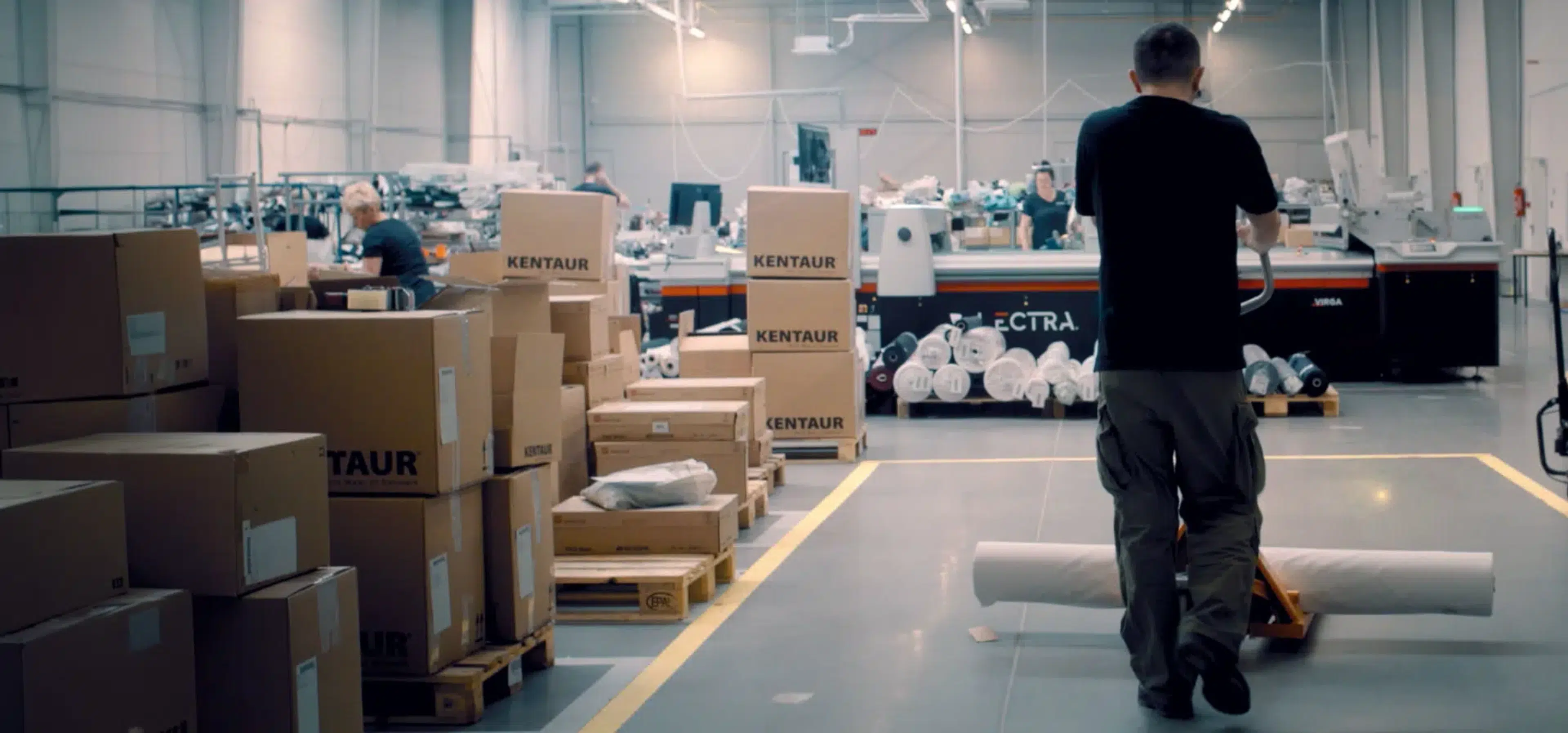
At Kentaur, the most important step towards circularity is designing workwear that lasts. Our garments are developed to withstand frequent use and repeated industrial washing, so they can remain in use for as long as possible.
Durability helps reduce the need for new raw materials and limits the amount of textile waste generated over time.
Eventually, however, all textile products reach the end of their lifecycle. When that happens, we work with partners and projects that explore new ways to reuse or recycle textile materials instead of sending them to waste.
Circular solutions in the textile industry are still evolving, but we continue to explore opportunities to extend the life of textiles wherever possible.
Working with textile reuse and recycling
Even durable workwear will eventually reach the end of its useful life. When that happens, we work with partners who specialise in reusing or recycling textile materials.
Through these collaborations, certain types of textiles can be kept in circulation instead of being discarded.
RE&UP
Kentaur collaborates with RE&UP, who specialise in recycling textile waste into new fibres.
In April 2026, we sent our first container of textile waste from our production in Poland to RE&UP. The shipment totalled 12,000 kg and consisted of sorted production waste that had been collected and stored since 2023.
RE&UP’s recycling technology can process a wide range of textile blends, including cotton, polyester and polycotton. This makes it possible to recycle both white and coloured textile waste, which has previously been a limitation.
The collaboration is currently focused on production waste from Poland, which represents approximately 8-9% of our total production volume. We continue to explore how similar solutions can be developed and scaled across other parts of our production.
Recycling solutions across production sites
Textile waste is an unavoidable part of garment production. Across our production sites, we work to identify solutions for handling and recycling these materials where possible.
This includes exploring different approaches, ranging from downcycling to textile-to-textile recycling, depending on the material type and available solutions.
The work focuses on improving data on textile waste, as well as identifying relevant partners and processes for recycling.
The aim is to reduce waste, make better use of resources and take responsibility for textiles across their lifecycle.