Stofklip Hjul

Circularity.

In progress.

At Kentaur, the most important step towards circularity is designing workwear that lasts. Our garments are developed to withstand frequent use and repeated industrial washing, so they can remain in use for as long as possible.

Durability helps reduce the need for new raw materials and limits the amount of textile waste generated over time.

Eventually, however, all textile products reach the end of their lifecycle. When that happens, we work with partners and projects that explore new ways to reuse or recycle textile materials instead of sending them to waste.

Circular solutions in the textile industry are still evolving, but we continue to explore opportunities to extend the life of textiles wherever possible.

Working with textile reuse and recycling

Even durable workwear will eventually reach the end of its useful life. When that happens, we work with partners who specialise in reusing or recycling textile materials.

Through these collaborations, certain types of textiles can be kept in circulation instead of being discarded.

RE&UP

Kentaur collaborates with RE&UP, who specialise in recycling textile waste into new fibres.

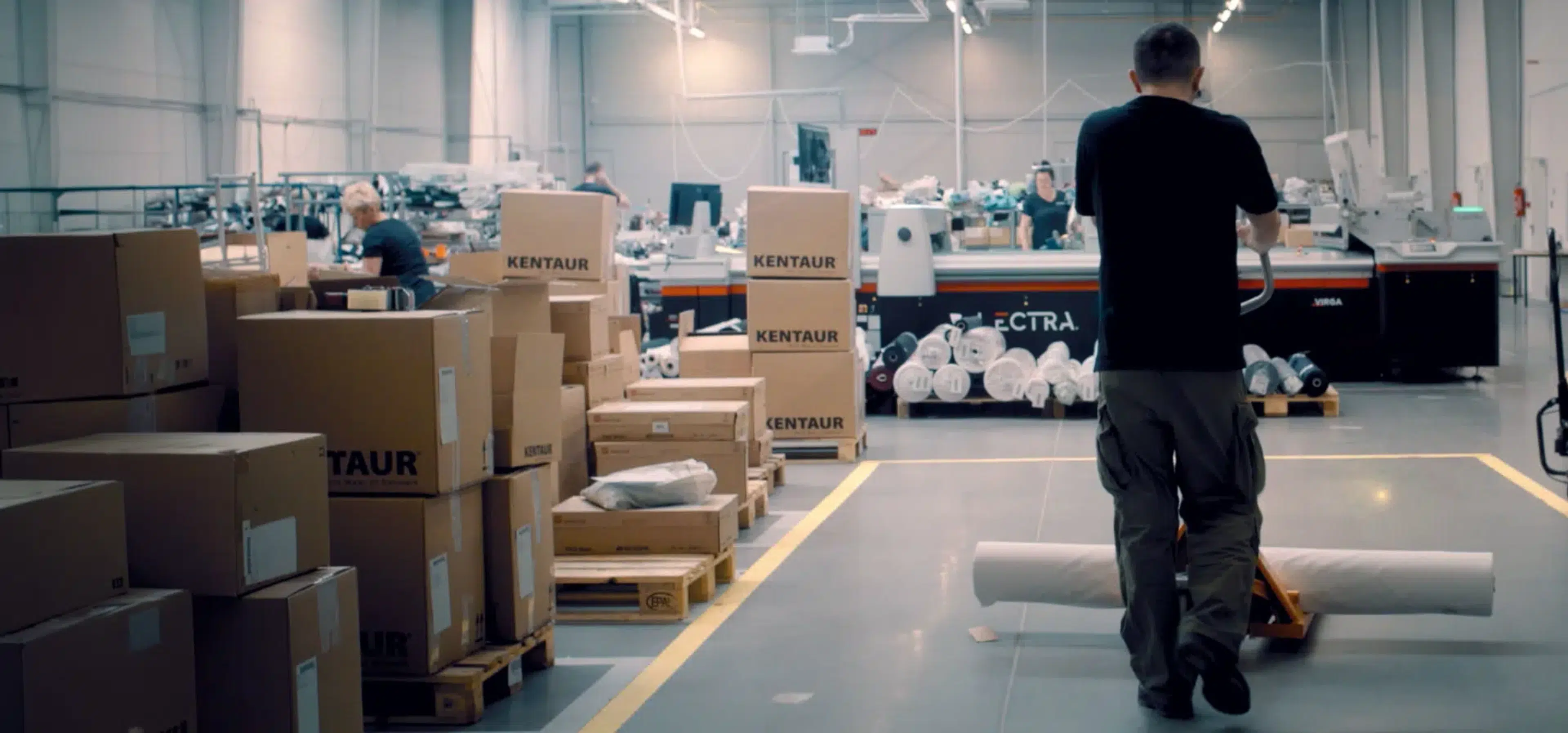
In April 2026, we sent our first container of textile waste from our production in Poland to RE&UP. The shipment totalled 12,000 kg and consisted of sorted production waste that had been collected and stored since 2023.

RE&UP’s recycling technology can process a wide range of textile blends, including cotton, polyester and polycotton. This makes it possible to recycle both white and coloured textile waste, which has previously been a limitation.

The collaboration is currently focused on production waste from Poland, which represents approximately 8-9% of our total production volume. We continue to explore how similar solutions can be developed and scaled across other parts of our production.

Recycling solutions across production sites

Textile waste is an unavoidable part of garment production. Across our production sites, we work to identify solutions for handling and recycling these materials where possible.

This includes exploring different approaches, ranging from downcycling to textile-to-textile recycling, depending on the material type and available solutions.

The work focuses on improving data on textile waste, as well as identifying relevant partners and processes for recycling.

The aim is to reduce waste, make better use of resources and take responsibility for textiles across their lifecycle.

Ourchoicematerials

Durability is the first step towards circularity.

Learn how we develop materials designed for long-lasting workwear

Using textile waste in new ways

Even when textiles cannot be reused directly, some materials can still be processed into new products.

Circular Touch Aprons & Menu Jacket

Circular Touch is part of our work to extend the life of textile materials and reduce the need for new raw materials.

The collection is made using fabric that contains 10–20% mechanically recycled post-consumer cotton and polyester, blended into new material. The garments are developed to deliver the functionality and durability required in professional environments.

The collection is currently available in aprons and in our Menu Chef Jacket.

Tencel Refibra Chef Jackets

TENCEL™ Lyocell with REFIBRA™ technology combines wood pulp with recycled cotton textile waste to create fibres containing recycled material from pre- and post-consumer sources.

In our chef jackets, the fabric consists of 50% TENCEL™ Lyocell with REFIBRA™ technology and 50% recycled polyester from PET bottles. The REFIBRA™ fibres themselves contain approximately 30% recycled content.

This material combination is part of our ongoing work to explore alternative fibre compositions and increase the use of recycled content in our products.

Reusing materials in other ways

In addition to fibre recycling, we also explore other ways to make use of surplus fabrics and textile waste.

For example, we have created bags and other merchandise from discarded fabrics, as well as aprons and outdoor jackets made from cutting scraps.

We have also collaborated with companies such as Vær and Amolia, who have used surplus materials from Kentaur in the production of shoes and toiletry bags. In some cases, fabrics and products have also been donated to organisations such as the Red Cross.

Due diligence

Circular systems require responsible supply chains.

See how we work with due diligence across our operations and supply chain

Developing circular solutions

While reuse and recycling solutions exist for some textile materials, large-scale circular systems for workwear are still developing.

At Kentaur, we therefore continue to explore new ways of extending the life of textiles and reducing waste across the value chain.

Kentaur LOOP

As part of this work, we have introduced the Kentaur LOOP pilot project, which focuses on upcycling used textiles in collaboration with laundry partners.

Through the project, laundries can return used textiles such as bed linen and tablecloths to Kentaur. The materials are then reused to produce new items, including chef jackets and aprons.

The aim is to extend the life of textile materials in their current form and reduce the demand for new raw materials.

Re:newed Workwear

Re:newed is our pilot project exploring how used textiles can be transformed into new resources through recycling.

In collaboration with ISKO PRO & RE&UP, worn-out workwear is collected, processed and turned into new fabrics and garments designed to perform in professional environments.

Garments made with recycled materials are being tested by Alsco to meet workwear standards, proving that circular solutions can work in practice.

Continuing the search for solutions

We are also monitoring developments in textile recycling and take-back systems across the industry.

Large-scale solutions that create value for both customers and textile producers are still emerging. For that reason, we continue to explore partnerships and technologies that can support more circular use of textiles in the future.

Circularity in textiles is a complex challenge, but we remain committed to contributing where we can.