daniel1.jpg

Daniel Guldmann.

Getting the best to work as one

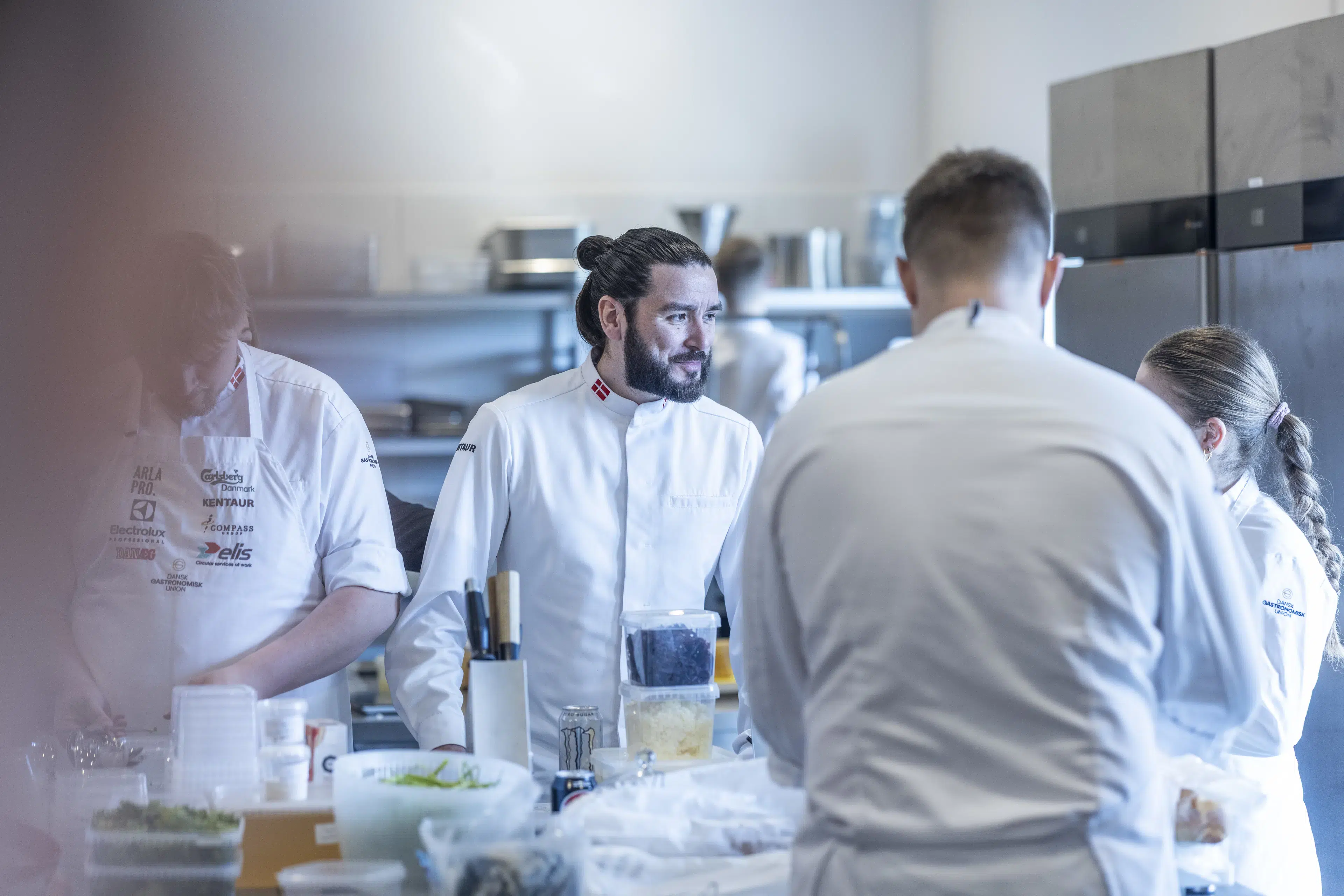
Daniel Guldmann leads some of the country’s most skilled chefs. As head coach of the Danish national culinary team, he is responsible for far more than the food. His job is to bring strong individualists together and ensure every detail is in place when the team steps into the kitchen at the World Championship.

He wears many hats. Coach, leader, coordinator and mediator.

“Sometimes you just have to find the right one.”

At the center of it all is Daniel Guldmann. Head coach of the Danish culinary team. He keeps track of everything not just the food, but the people.

“You have to be able to see what is about to happen before it happens.”

Around him, everything is in motion. Stopwatches. Timed training. Competition simulations.

Everything is repeated, adjusted and refined down to the smallest detail. In a few months, they will be competing at the World Championship.

Where it all began

It started at a long table in Southern Jutland. Daniel Guldmann’s grandmother brought the family together for every holiday. The table was always full, and everything was made from scratch. She worked as a cook for large gatherings and was used to preparing meals for many people.

As a child, he sat among them. Voices overlapping. Plates passed around. Dishes left untouched while conversations carried on. Hours passing without anyone getting up.
Landsholdet_KENTAUR_RAISFOTO_C1__7570-kopi.jpg

Daniel Guldmann

That was where I realized what food can do.

A different path

He started out as a dishwasher. Hands in the water, eyes fixed on the kitchen, where the pace was faster and something was always happening.

But that was not the path he had imagined. He had enrolled in a technical upper secondary program and planned to become a design and innovation engineer.

“On paper, it made perfect sense. But it was simply too boring for me. I could not sit still.”

Instead, the kitchen drew him in with its energy and intensity. When a friend enrolled in culinary school in Svendborg, he joined to try it out. He ended up completing every module not just as a chef, but also as a baker and a butcher.

“When you do something, you should do it properly. And if I had not done it, I would never have realized that I am not suited to being a baker. I cannot get up that early every morning.”

He went on to train at the renowned hotel and restaurant Fakkelgården in Kollund.

  • Landsholdet_KENTAUR_RAISFOTO_C1__0807-kopi.jpg
  • Landsholdet_KENTAUR_RAISFOTO_C1__0795-kopi.jpg

A tough environment

At Fakkelgården, he learned to cook with high quality ingredients and high expectations. He thrived on the pace and quickly understood what was required.

Later, he followed his then girlfriend to Switzerland, where he worked his way into Michelin starred kitchens. First a one star, then a three star.

It was a different level. A different language. A kitchen where no one was spared.

“I did not understand a thing in the first few weeks, and I got yelled at constantly. Our head chef was notorious for being tough and, at times, downright cruel. I saw grown men break down in tears because of him.”

He quickly learned to stay present and take responsibility. Despite the intensity, he stayed for two and a half years.

“I learned a lot during those years. I probably also became tougher than necessary. It was hard, but incredibly educational. And it has made me much more aware of how I want to lead today.”

Joining the National Team

It began with a phone call to Morten Andersen, now director of the Danish Gastronomic Union. Guldmann had reached a point in his career where he was ready for something new.

“I asked if there might be an opportunity for me somewhere. He told me to wait. Not long after, he called back. There was a competition in Barcelona. And I was going.”

He has not looked back since. More than ten years have passed with the national team first in the cold section, and now as head coach.

Landsholdet_KENTAUR_RAISFOTO_C1__0868-kopi.jpg

No one stands alone

Bringing together some of the country’s best chefs is not without its challenges. These are chefs who run their own kitchens. They are used to being in charge and to their way being the right way. Now they must stand side by side and make it work.

“That is not why we are here. We are here to bring out the best in each other.”

He pays close attention not only to the food, but to what happens between people. The small things. The tone of voice. The looks exchanged. The tensions that can grow if left unaddressed.

Because it happens quickly. A comment. A moment of irritation. A coffee cup left in the wrong place. Small things that can become big if no one steps in.

So, he deals with it immediately. Takes people aside. Resolves it.

“Often it takes five minutes, and then it is gone. But if you leave it, it grows.”

It is about removing ego from the room and reminding everyone why they are there. It is not about the individual. It is about the team.

Landsholdet_KENTAUR_RAISFOTO_C1__7570-kopi.jpg

Daniel Guldmann

I am not looking for the most talented person. I am looking for the one who steps back and has someone else’s back.

That is the culture he is building. One where they support each other, improve together and where no one stands alone when things get tough.

Mastering the details

Preparations for the World Championship are already underway. The schedule is set. The dishes are decided. Everything is practiced again and again.

They train under pressure. Running through the entire process as if it were the competition. Same setup. Same intensity.

The goal is simple. Control everything that can be controlled. So, when the moment comes, nothing needs to be thought about. It is already in their hands and in their bodies.

“The food has not been our biggest challenge. It is the details. Using the wrong color-coded cutting boards, for example. Small, frustrating mistakes that should not happen. That is why we practice. We refine everything down to the smallest detail.”

The responsibility is his

It is about making everything come together. Because the ambition is clear.

“We are going there to win. We know a lot must come together for that to happen. But if I did not believe it, I should not be sitting here.”

But it is about more than medals. It is about the people. The dynamics. And showing the work behind it.

“They have put so many hours into this. Sacrificed so much. They deserve something in return.”

Still, the responsibility rests with him. To ensure the team is ready. That they function as one. And when it truly matters, that unity is what must carry them through.

Meet more professionals.

Explore all ambassadors here