Kentaur_Helsinki_RAISFOTO_C1__4284.jpg

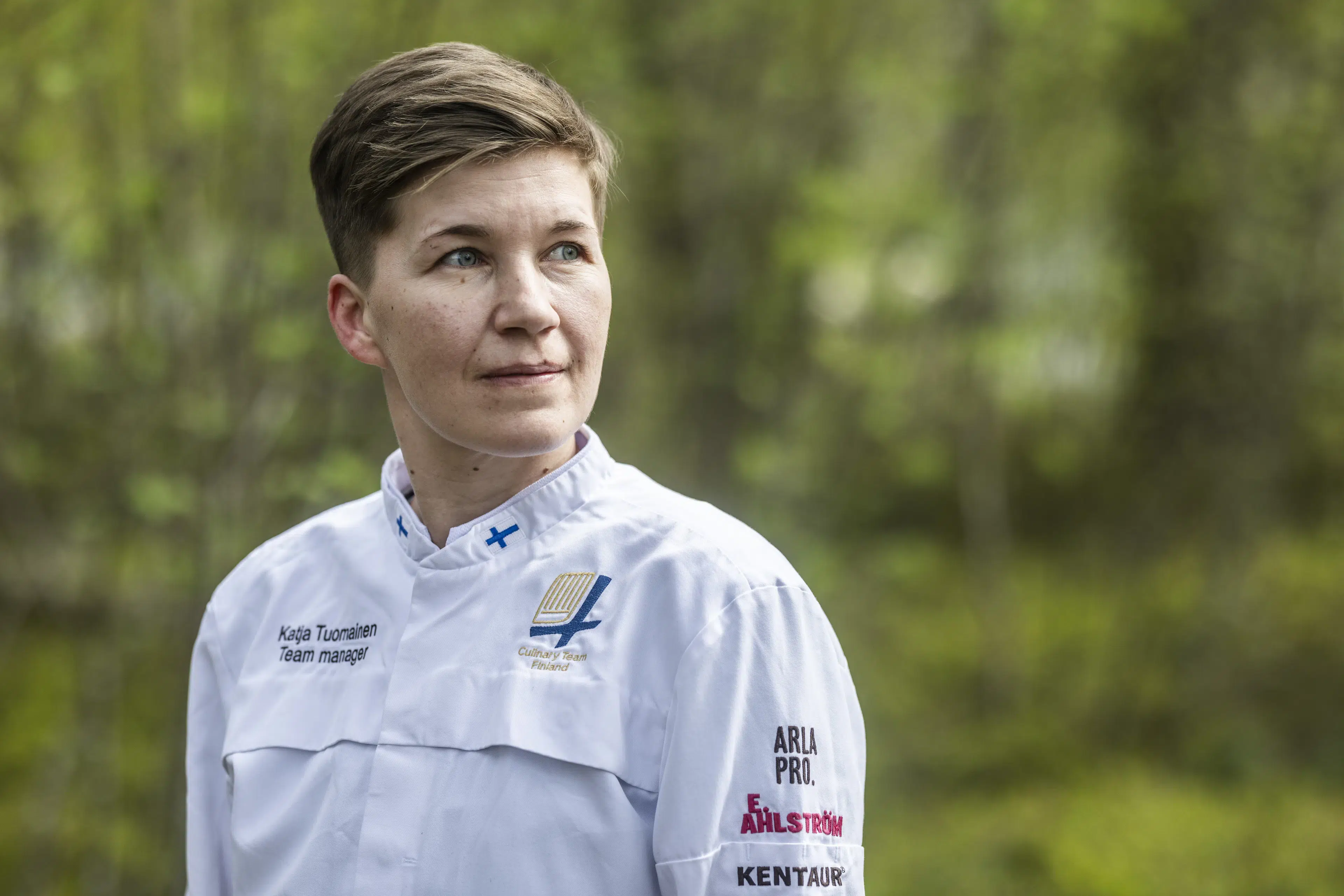
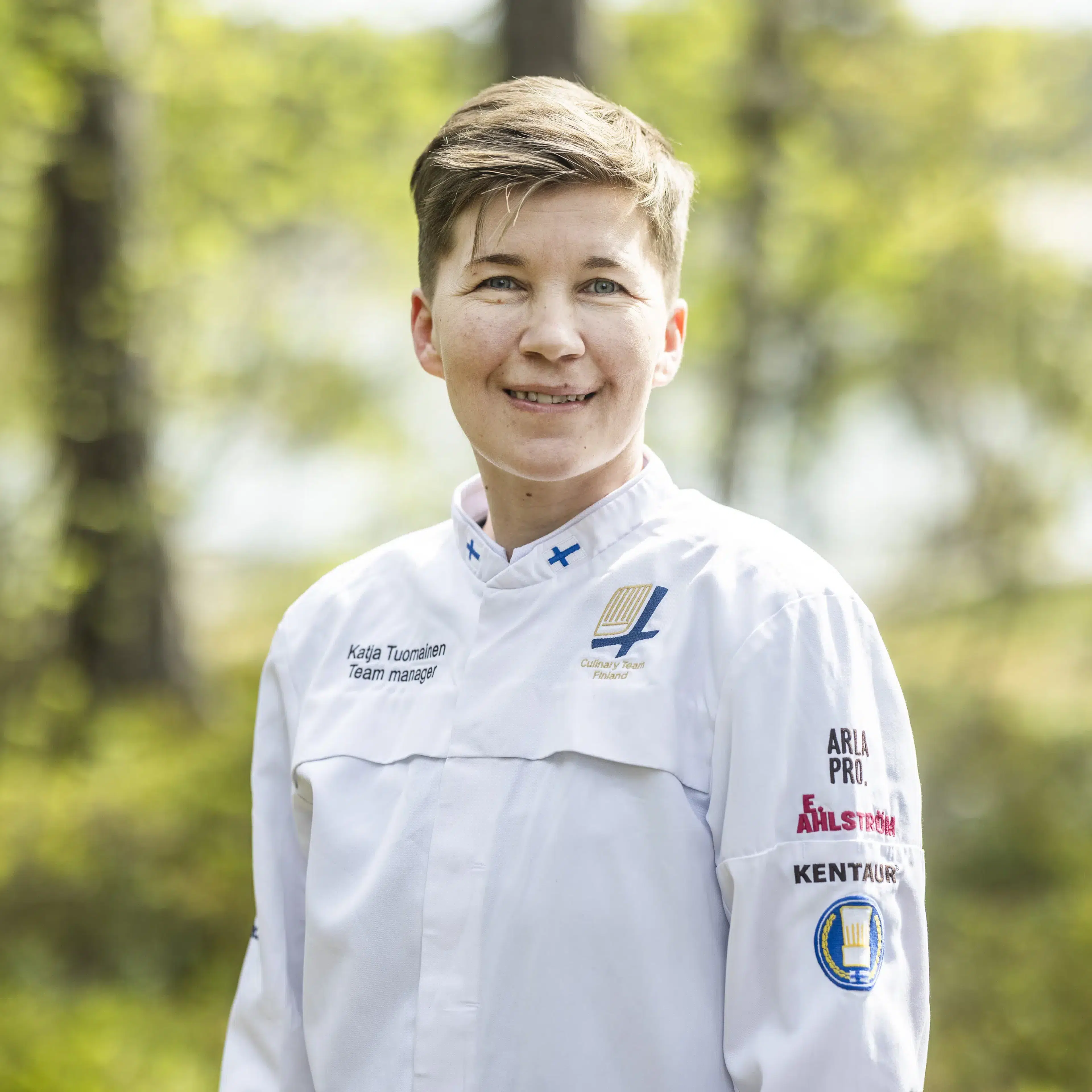
Katja Tuomainen.

You can be kind and still win gold

As Team Manager of the Finnish Culinary Team, Katja Tuomainen challenged traditional kitchen culture and helped lead Finland to a historic Olympic gold medal. Now she is preparing her team for the World Championship 2026.

"You can be a good and kind person and at the same time be a top level chef."

For Katja Tuomainen, that belief is more than a leadership principle. It is the foundation of everything she has built with the Finnish Culinary Team.

As Team Manager, she helped guide Finland to a historic gold medal at the Culinary Olympics 2024. Not through fear, hierarchy or raised voices, but through trust, openness and a strong sense of teamwork.

It is an approach that stands in contrast to many of the traditional stereotypes of professional kitchens. One that has helped turn Finland into one of the strongest culinary teams in the world.

Now, with the World Championship 2026 approaching, Tuomainen is preparing her team for the next challenge.

A childhood shaped by food

Long before she led a national team, Katja Tuomainen spent her time in the kitchen with her grandmother in Eastern Finland.

Together, they made traditional Karelian pies, meat pies and cookies by hand. She was only five or six years old at the time, but the experience left a lasting impression. 

“I didn’t think that I wanted to be a chef or anything. I just loved the food,” she says.

Food was not the only creative influence in her childhood. Growing up in a large family with twelve siblings, creativity was everywhere. Music filled the home, and many of her brothers and sisters sang or played instruments.

“I have a big family. Everybody is really good with music. They are really good singers and play everything.”

Tuomainen played guitar herself, but it was in the kitchen that she found her own way of expressing creativity.
Kentaur_Helsinki_RAISFOTO_C1__4327.jpg

Katja Tuomainen

I started to think about what is the thing I can do where there are no limits to creating something. And it was food.

That realization led her to culinary school. More importantly, it led her to a profession where craftsmanship, creativity and bringing people together could all exist in the same place. She had found where she belonged.

Finding her own path

Unlike many chefs, Katja Tuomainen never followed a traditional fine dining path.

Instead, she built her career across a variety of kitchens. She began in large scale operations, preparing meals for thousands of people every day, before gradually moving into smaller and more specialized roles.

“I wanted to experience different places,” she says.

From public kitchens to private dining and high-level catering, each role added a new perspective and helped shape the leader she would later become. Her career eventually led her to some of Finland's most important institutions, including serving the Finnish Prime Minister and working with the Presidential Palace.

It was a different route into the profession. One that taught her as much about leadership and teamwork as it did about cooking.

And it would eventually lead her to the Finnish Culinary Team.

Changing the culture

Katja Tuomainen first applied to join the Finnish Culinary Team in 2012.

She was accepted but turned down the opportunity. At the time, she felt she still lacked the experience needed to contribute at the highest level.

A few years later, she applied again. This time, she joined the team and spent several years as a team member before eventually stepping away.

It gave her a close look at how the team operated. And it left her with a feeling that something was missing.

“I had a really strong feeling about what was wrong before and why we didn’t win,” she says.

When she was later asked to return as Team Manager, she accepted immediately. But only on one condition. She wanted the opportunity to do things differently.

For Tuomainen, the team should function more like a professional sports team than a traditional kitchen. Training was about more than cooking. It was about preparation, communication and understanding what affects performance.

“We focus a lot on what we eat, how we sleep and how things are at home,” she says.

Her approach was built around the individual as much as the team.

“If I have 15 team members, I have 15 different people.”

Getting to know each person became just as important as refining recipes and techniques. Because for Tuomainen, bringing out the best in a team starts with understanding the people behind it.

  • Kentaur_Helsinki_RAISFOTO_C1__4391.jpg
  • Kentaur_Helsinki_RAISFOTO_C1__4609.jpg

One great team

Creating a winning team was never just about finding the most talented chefs. For Katja Tuomainen, it was about creating an environment where people could perform at their best together. 

One of the first things she asks of her team is to leave their titles behind. Whether someone works in a Michelin-starred restaurant, a lunch restaurant or on a ferry makes no difference once training begins.

“This is not a place for ten great chefs,” she says. “This is one great team.”

Everyone is expected to contribute. Everyone is expected to learn. And everyone is expected to support each other.

It is a philosophy that shapes everything from communication to competition preparation. Tuomainen places as much value on personality and mindset as she does on technical skills.

“It’s more about mindset,” she says. “If your mindset is right, you learn a lot and fast.”

Trust also plays a central role. Team members are encouraged to speak openly, support each other and bring challenges forward before they become problems.

“We talk a lot,” she says.

That openness became especially important in the months leading up to the Culinary Olympics. Several team members experienced personal losses and difficult situations outside the kitchen. Instead of ignoring it, the team faced it together.

Kentaur_Helsinki_RAISFOTO_C1__4327.jpg

Katja Tuomainen

There was a lot of talking. We decided to focus and do it together.

For Tuomainen, that is what creates lasting success. Not fear. Not shouting. Not hierarchy. Just people working towards the same goal.

You will never win that way

Not everyone believed in Tuomainen's approach. When she took over as Team Manager, some questioned whether a culture built on trust, openness and individual responsibility could succeed at the highest level.

“People said to me, no, this is not the right way,” she says. “You're never going to win the Olympics this way.”

But Tuomainen stayed committed to her vision. For years, she had reflected on her own experience as a team member. She knew what it felt like not to be heard and to feel disconnected from the bigger picture. If she was going to lead, she wanted to do it differently.

“I listen to everybody,” she says.

As the Culinary Olympics approached in 2024, confidence within the team continued to grow. They had trained for years, refined every detail and built a culture where everyone felt ownership of the final result.

Then came the competition in Stuttgart. When Tuomainen watched the team perform, she had a feeling. Not because everything was perfect. But because she could see something bigger.

The teamwork. The focus. The way people worked together under pressure.

“I knew we were going to win,” she says.

When the judges later delivered their feedback, one detail stood out. Beyond the food, they highlighted the team's spirit and cooperation.

For Tuomainen, that meant just as much as the gold medal itself. It was proof that there is more than one way to build a winning team.

Kentaur_Helsinki_RAISFOTO_C1__4385.jpg

The next challenge

Success brings new expectations. When Finland arrives at the Culinary World Championship 2026, they will no longer be the underdog. They will be the team everyone wants to beat.

Tuomainen knows it.

“Of course,” she says when asked whether the pressure is greater now.

The challenge is not only to perform at the same level again. It is also to keep evolving. This year, a new innovation category has been introduced, adding another element to an already demanding competition.

At the same time, several countries continue to raise the bar.

“Denmark, Sweden, Norway and Switzerland are always strong,” she says. “But Estonia is also doing really well at the moment.”

Despite the added pressure, her focus remains unchanged. While competitions are often decided by small details, Tuomainen believes the foundation of success is still the same as it was in Stuttgart.

“Teamwork,” she says.

It is a simple answer. But for the Finnish Culinary Team, it has become a winning formula.

Built on the details

Details matter in competition cooking. Every movement is practiced. Every ingredient is carefully considered. And according to Tuomainen, the same attention to detail applies to the way a team presents itself.

For her, workwear is about more than appearance. It is about comfort, confidence and creating a sense of unity.

“When chefs have nice clothes that fit well, they work better and feel more confident,” she says.

That shared identity becomes especially important when representing a country on the international stage. When the Finnish Culinary Team steps into a competition kitchen, they do so as one team. The uniforms help reinforce that feeling.

“It creates extra team spirit,” she says.

But ultimately, the message she hopes people take away is not about clothing or medals. It is about passion.

Kentaur_Helsinki_RAISFOTO_C1__4327.jpg

Katja Tuomainen

We are doing this because of the passion. If the winning comes, it is great as well.

More than a gold medal

For Katja Tuomainen, success has never been about a single competition. What motivates her is the opportunity to build something that lasts.

After years of working to reshape the culture of the Finnish Culinary Team, she hopes the values behind their success will continue long after she is no longer leading it.

“I don't want people to think it was only a one-time miracle,” she says.

Instead, she wants future generations of chefs to inherit a culture built on trust, respect and teamwork. One where people can perform at the highest level without sacrificing who they are. That is also the advice she hopes young chefs take with them.

“I hope they learn that you can be a good and kind person and at the same time be a top-level chef.”

It is a simple message. One that has already taken Finland to Olympic gold. And one that Tuomainen hopes will carry the team into the future.