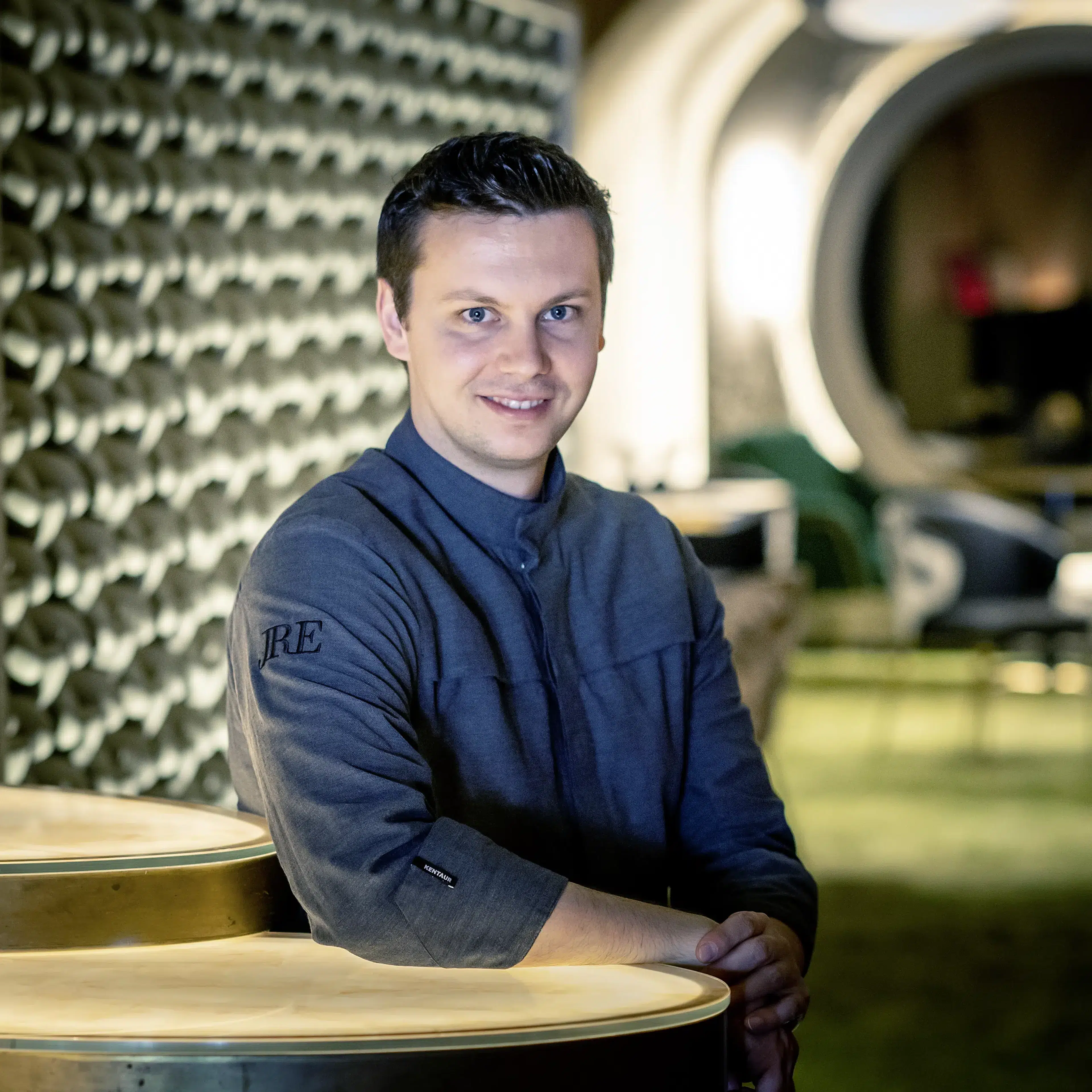
DSC_5784.jpg

Lukas Kienbauer.

You cannot be perfect, but you can look for perfection

A portrait of Lukas Kienbauer, a chef who creates entire worlds through flavour, fire and fierce determination.

It is still dark outside when Lukas Kienbauer unlocks the door to his restaurant. The air smells faintly of yesterday’s bread and lemon cleaner. No guests. No team. Just silence and soft morning light hitting the open kitchen. He wipes down the steel surfaces himself. Not because he has to. But because he cares.

For Kienbauer, excellence lives in the details no one else notices. That final five percent others might skip is where he finds meaning. And maybe even a little magic.

Over the past decade, he has quietly rewritten the rules for what fine dining can be in a baroque Austrian town better known for its beer than for seven-course surprise menus. Not to impress the world, but to prove that excellence can grow anywhere. As long as it stays honest. 

A spark lit early

Lukas Kienbauer grew up in an inn, where his father ran the kitchen and hospitality was part of everyday life. It was not glamorous, but it was real. Pots boiling. Doors swinging. People arriving. Food being made because someone needed it.

He never set out to become a chef. But the rhythm of the kitchen stayed with him. He learned by watching. By standing next to his father. By noticing the way things were done and trying to do them just a little better.

“At one point I was showing the trainees how to make schnitzel,” he says with a smile.

Even as a teenager, he was not the loud one. He paid attention. He took pride in getting things right. He liked the feeling of doing something properly, from start to finish.

Later, during his apprenticeship years, that quiet focus followed him. He was not chasing praise or position. He simply wanted to improve. Every day. Every task. Every plate.
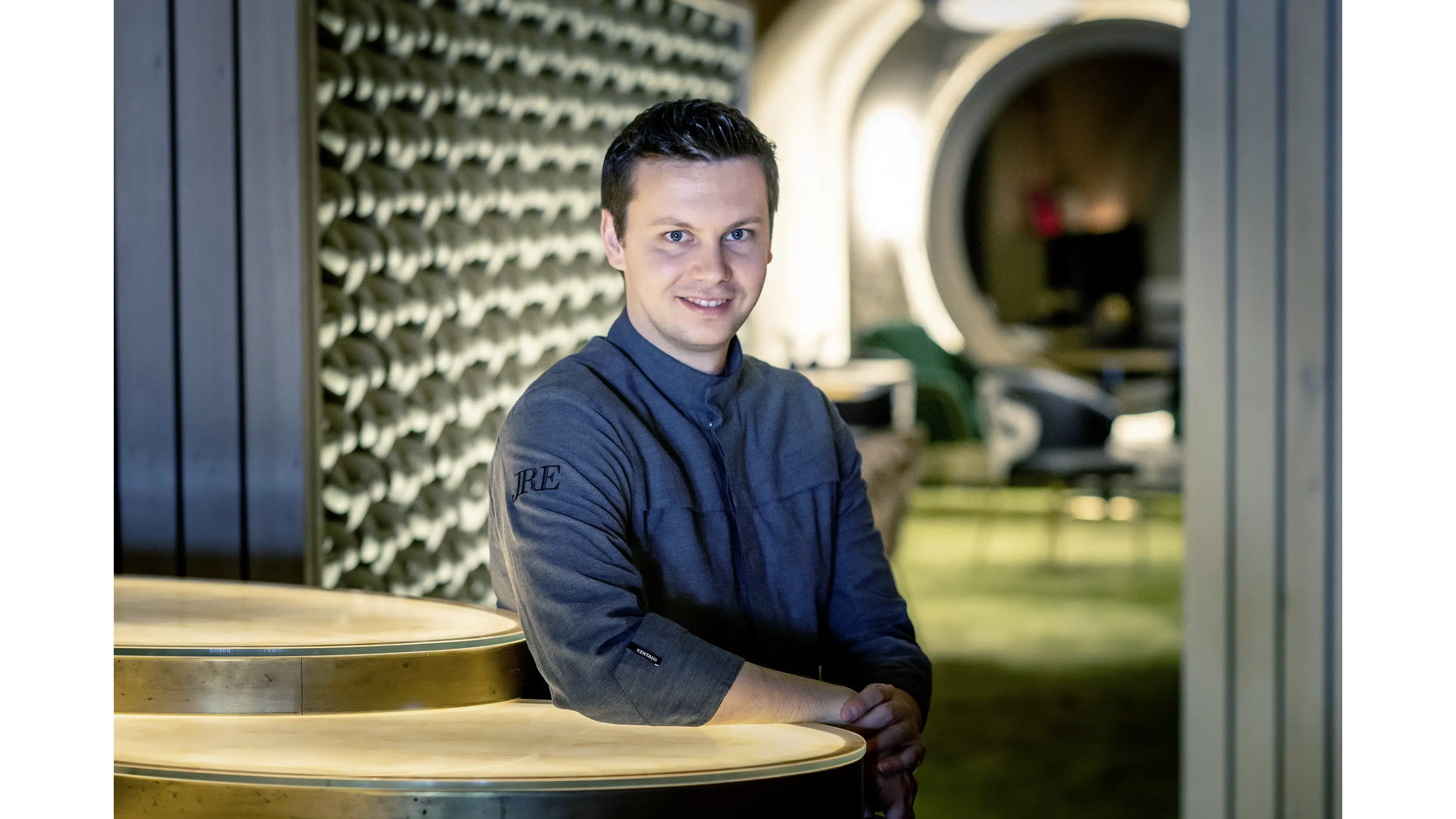
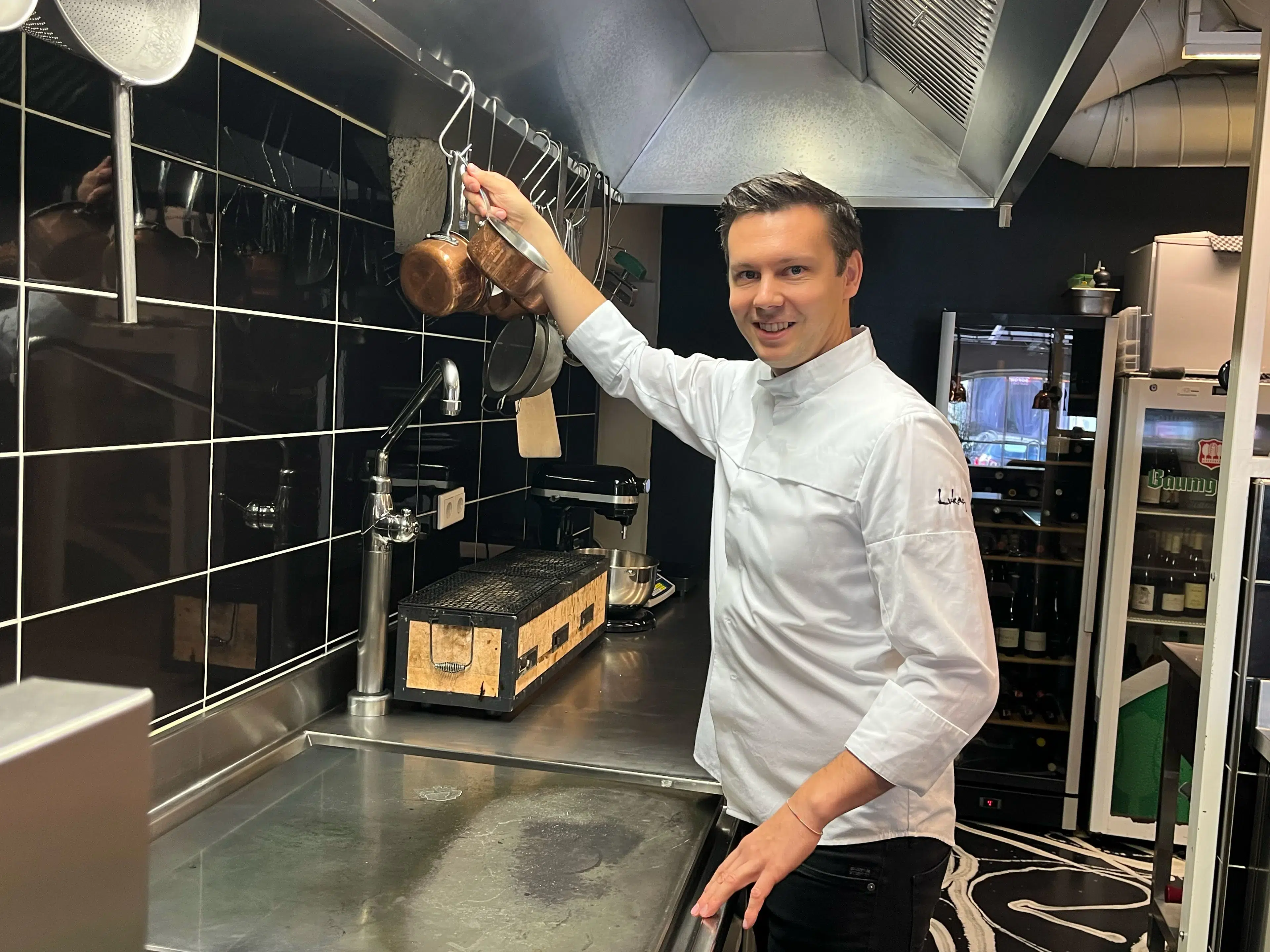
Lukas Kienbauer.jpg

They thought I was crazy

In 2015, Lukas Kienbauer bought a crumbling building in the middle of Schärding. At the time, the town was known more for beer and hearty food than for minimalist plating and seven-course tasting menus. He was 24 years old, and most people thought he had lost his mind. “Everyone said I was crazy. Who wants a gourmet restaurant here? In a town like this?”  But not everyone doubted him. His parents believed in him. So did his brother. And his girlfriend. It was not a big circle, but it was enough.

The first few weeks were busy. Curiosity brought people through the door. But then came the silence. Half a year of evenings with just two or four guests. Often none.

He started every day around six in the morning. Cleaned the restaurant. Polished the windows. Then worked a full service with his sous-chef and a small service team. At night, after guests had gone home, he cleaned plates while his sous-chef cleaned the kitchen. Most nights he left around two thirty in the morning. Then it started again a few hours later.

“We made everything ourselves. We did not have a cleaner. We could not afford more staff because some days there were no guests. I cleaned the toilets. I cleaned the windows. And still, we cooked like it mattered.”

It was exhausting. But he never gave up.

Slowly, word began to spread. First came curious visitors from nearby Passau. Then came the glowing review in Süddeutsche Zeitung. The phone started ringing. Reservations began to fill up.

Perfection with soul

Lukas Kienbauer does not cook to impress. He cooks to understand. To take something simple and see how far it can go without losing what made it special to begin with.

He is drawn to clean flavours and quiet precision. Nordic and Japanese kitchens have shaped his thinking. But the real heart of his cooking lies in how he treats ingredients.

He wants to use everything. Respect everything. Waste nothing.

One of his best-known dishes uses pork tail. Hours in broth. Crisped skin. Served with a cabbage roll and a sauce made from the same broth. Everything used. Nothing wasted.

And when he really wants to surprise people, he turns to vegetables.

“Most people eat so much meat you cannot surprise them with it anymore. But a dish with just carrots or beetroot, and it still has depth, texture, something new, that is exciting.”

The ingredients come from nearby farms and producers. Not from a catalogue, but from relationships built over years.

IMG_0315.jpg

Never far from the fire

Lukas Kienbauer now runs three restaurants in Schärding. But you would never find him far from any of them.

He still walks between them several times a night. From his fine dining flagship to the steak restaurant down the square, and over to Izakaya by Lukas, the Japanese-inspired restaurant and bar where he plays with darker moods and layered cocktails.

“I walk back and forth five to ten times every evening. Just to see if things are going the right way. If the deliveries are right. If the guests feel good. If someone has a birthday and we need to prepare something. All the small things that matter.”

If service is busy, he steps in. If something feels off, he helps correct it. Not from the outside, but from within.

“Sometimes I help plate dishes. Sometimes I serve drinks. It is a little bit of watching, a little bit of pushing, and a little bit of helping.”

He leads from within, and that shapes how he builds his team too. Over time, Lukas has learned to look beyond the usual boxes.

“I don’t hire people anymore because of their qualifications. I only hire them for their personality and how they think about gastronomy.”

What matters most is not just where someone has worked. It is how they treat the work, and the people around them.

Built for heat 

For Lukas, workwear is part of the experience. Not just for the team, but for the guest.

“When people walk in, they notice the plates. But they also see the people. The clothes are part of the whole impression.”

Lukas does not talk endlessly about workwear. But he knows what details matter. He talks about mobility, breathable fabrics, sleeves that stay in place, and pockets that actually work. Not to show off. But to make sure his team can stay focused on what they are really there to do.

“My old jackets were thick and heavy. By the end of service, I was soaked in sweat. It did not feel good. Now it feels like I am wearing something made for real life in a kitchen.”

His team has been wearing Kentaur since 2021. It started with aprons for one restaurant. Now it is all three.

Lukas Kienbauer.jpg

Lukas Kienbauer

We tried it and it just worked. The jackets are light, resistant, and comfortable. And they fit into our world. Like everything else in his kitchen, what you wear should help you focus. It should never get in the way of what really matters.

He still walks between his restaurants. He still notices if the plates are not wiped clean or if a candle is off-center. He still wants to get better.

But when his son tugs at his hand in the morning and asks to build a cave out of blankets, everything else fades for a moment. Lukas gets down on the floor. Plays. Listens. Laughs.

“You hear people say everything changes when you become a parent. But it really does. You start to see what actually matters.”

He still dreams of a second Michelin star. But he is not going to chase it at any cost. Not if it means changing who he is or what his restaurants stand for.

He wants to do it his way. With heart, with honesty, and on his own terms.

Because in the end, it is not about the stars. It is about what you build. The people you do it with. And the kind of life you build around it.

Meet more professionals.

Explore all ambassadors here